Analysis
The culture of Pennsylvania's swing counties
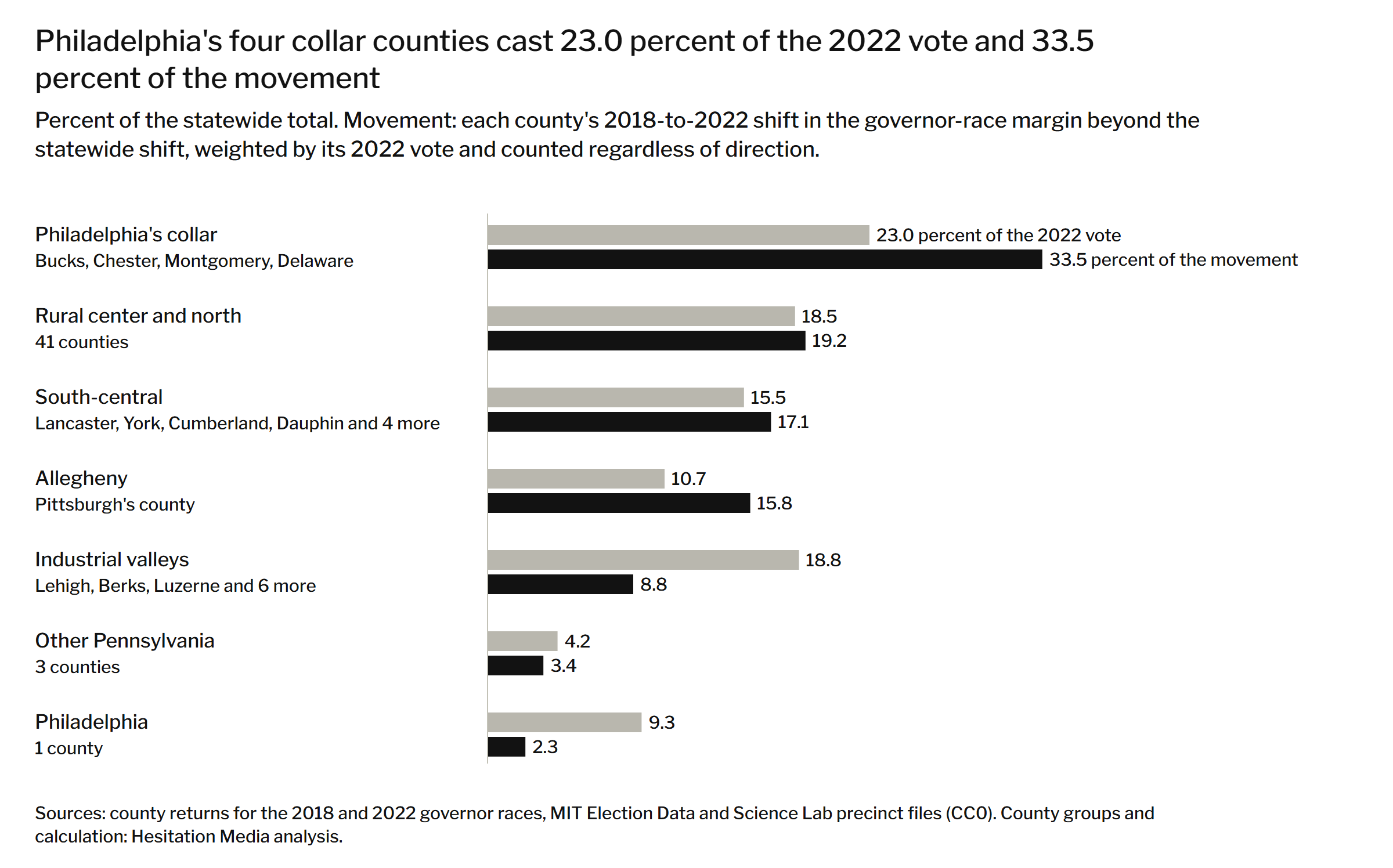
Philadelphia's four collar counties cast 23.0 percent of Pennsylvania's 2022 governor vote and 33.5 percent of the county movement between the 2018 and 2022 races.
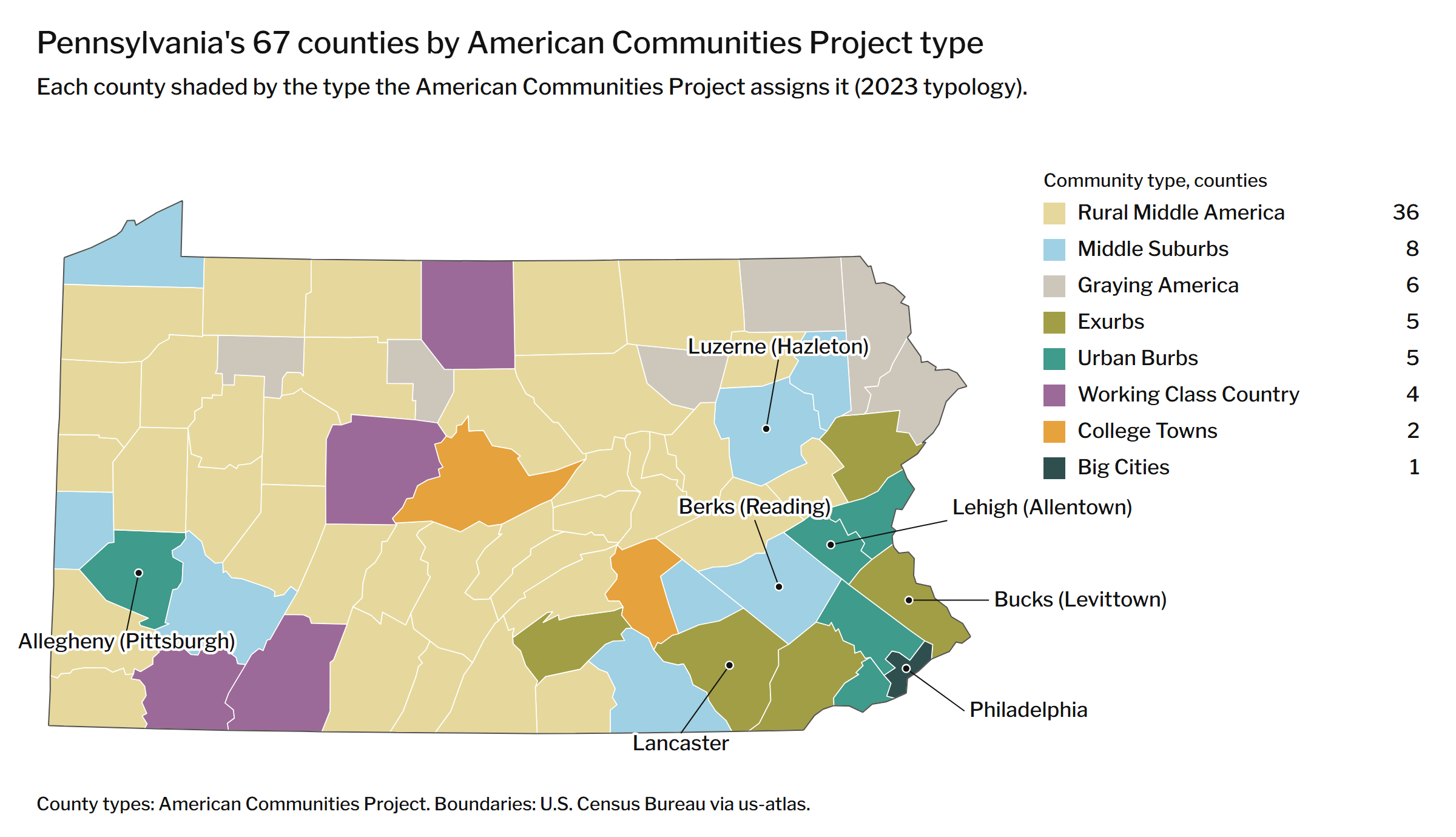
| Figure | Value |
|---|---|
| Collar counties’ share of 2018-to-2022 movement | 33.5% |
| Steelworkers halls in western Pennsylvania, 1960s to 2022 | at least 37 to 8 |
| Hazleton’s Latino share, 2000 to 2010 | 4.8% to 37.3% |
| Philadelphia votes cast, 2018 to 2022 | −10.1% |
Bucks, Chester, Montgomery and Delaware, the four counties around Philadelphia, cast 23.0 percent of Pennsylvania’s vote for governor in 2022 and 33.5 percent of the movement between the 2018 and 2022 races. The nine industrial valley counties, among them Lehigh, Berks and Luzerne, cast 18.8 percent of the vote and 8.8 percent of the movement.
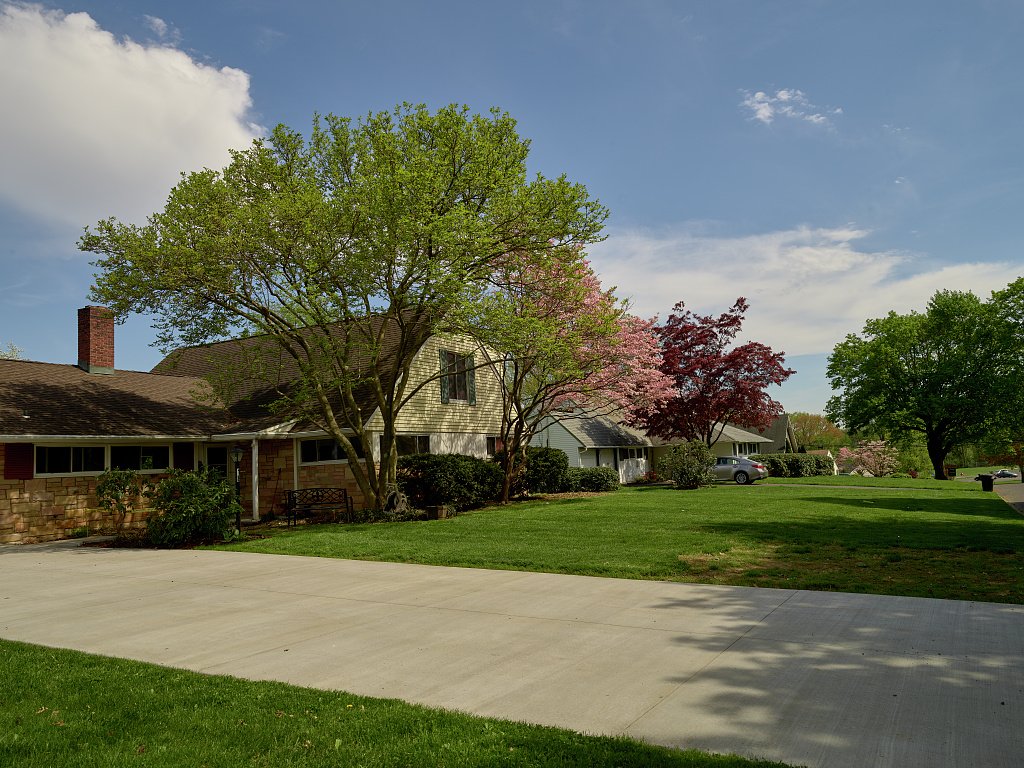
Levittown, Bucks County
In 1951 Levitt and Sons bought 5,750 contiguous acres of Bucks County farmland near U.S. Steel’s Fairless Works. Between 1952 and 1958 the company put slightly more than 17,300 houses on the land in six models, across four municipalities and three school districts. The first family moved in on June 23, 1952.
The 2010 census counted the community about 90 percent white. William Levitt said that “we can solve the housing problem or we can solve the racial problem, but we cannot combine the two.” Daisy and William Myers moved into one of the houses in August 1957 and faced a year of racist harassment.
Bucks is the closest of the four collar counties in presidential years, at 0.8 points Democratic in 2016 and 4.4 in 2020. Its three neighbors shifted further than Bucks toward the Democrat, relative to the statewide change, between the two governor’s races.
| County | American Communities Project type | Bachelor’s degree, adults 25 and over | Shift relative to the statewide change, 2018 to 2022 |
|---|---|---|---|
| Montgomery | Urban Suburbs | 52.3% | D +6.4 |
| Delaware | Urban Suburbs | 41.6% | D +4.9 |
| Chester | Exurbs | 56.6% | D +4.5 |
| Bucks | Exurbs | 43.9% | D +3.7 |
| Pennsylvania | 34.5% |
Sources: American Communities Project; 2019-2023 American Community Survey; Hesitation Media analysis of county returns for the 2018 and 2022 governor races.
Maximilian Frank found that anti-Trump grassroots groups, many led by women, revived local Democratic organizations in six swing counties near Philadelphia and the Lehigh Valley and helped Democrats there in 2018.
Together the four counties gave the Democrat a net 388,273 votes in 2022, up from 334,410 in 2018.
Pittsburgh and the mill counties
Allegheny County cast 10.7 percent of the 2022 vote and accounted for 15.8 percent of the movement. The counties around it moved in both directions.
| County | American Communities Project type | Shift relative to the statewide change, 2018 to 2022 |
|---|---|---|
| Butler | Rural Middle America | D +5.5 |
| Allegheny | Urban Suburbs | D +5.1 |
| Westmoreland | Middle Suburbs | D +1.6 |
| Washington | Rural Middle America | D +1.1 |
| Beaver | Middle Suburbs | R +3.0 |
| Fayette | Working Class Country | R +8.9 |
Sources: American Communities Project; Hesitation Media analysis of county returns for the 2018 and 2022 governor races.
Pittsburgh, struggling by the 1970s and 1980s, developed health care as another major industry, Michael Camp writes in a 2024 review of Gabriel Winant’s “The Next Shift.” In the 2019-2023 survey, 28.3 percent of Allegheny County’s employed residents worked in education, health care and social assistance, and 7.6 percent in manufacturing.
Lainey Newman and Theda Skocpol counted at least 37 United Steelworkers halls in western Pennsylvania in the 1960s and eight still operating as halls in 2022, the Harvard Gazette reported. The halls had hosted scout meetings, alcohol support groups, weddings and sports leagues. The authors found that workers turned to other, often more conservative groups, among them gun clubs.
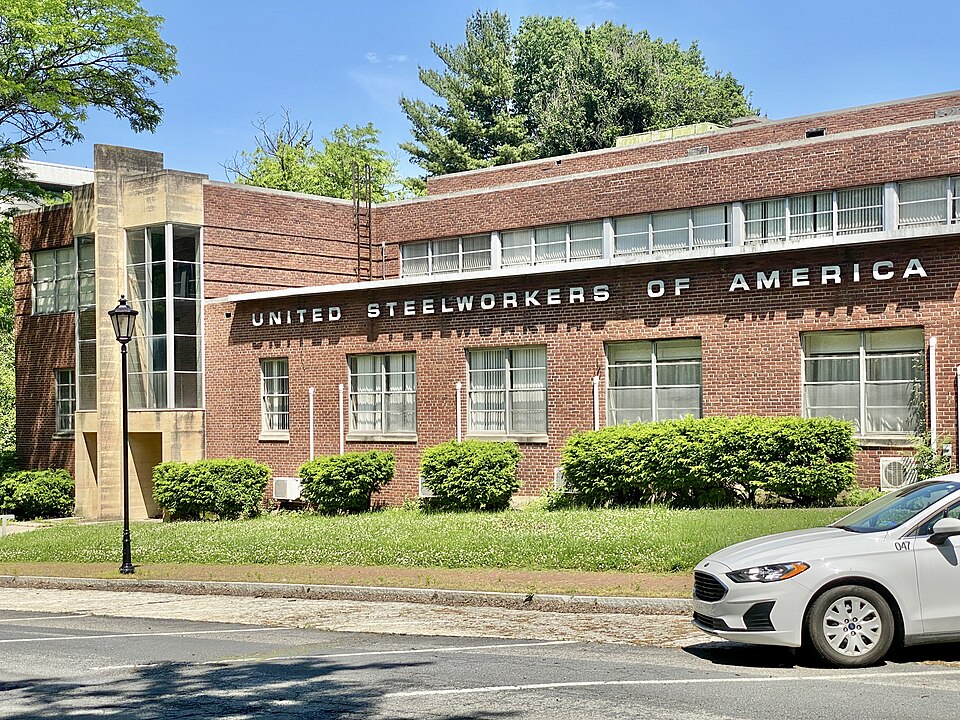
Of the bumper stickers Newman recorded in union parking lots, 12 percent carried union messaging and 1 percent supported Democratic candidates. The Bureau of Labor Statistics counted 620,000 union members in Pennsylvania in 2025, 10.9 percent of wage and salary workers, down from 11.7 percent the year before.
The Diocese of Pittsburgh announced in April 2018 that it would group its 188 parishes into 57, after a 1990s consolidation that cut the count from 323 to about 225. The Very Rev. Samuel Esposito, the diocese’s episcopal vicar, told PublicSource that “the church is not a museum,” summarizing a refrain of Pope Francis.
Block Communications said on Jan. 7, 2026, that the Post-Gazette would print its final edition May 3, after company losses of more than $350 million over 20 years and a strike of more than 1,000 days. In April the Venetoulis Institute for Local Journalism agreed to buy the paper, CNN reported, with plans to print Thursdays and Sundays.
Hazleton and the valley cities
Fulfillment centers moved into northeastern Pennsylvania after late-1990s state tax breaks, and Latinos, mostly of Dominican descent, migrated to fill the jobs, according to Paul Shackel. Hazleton counted 1,132 Latino residents in 2000, 4.8 percent of the city, and 9,454 in 2010.
The Census Bureau’s 2019-2023 American Community Survey puts the Latino share at 63.1 percent.
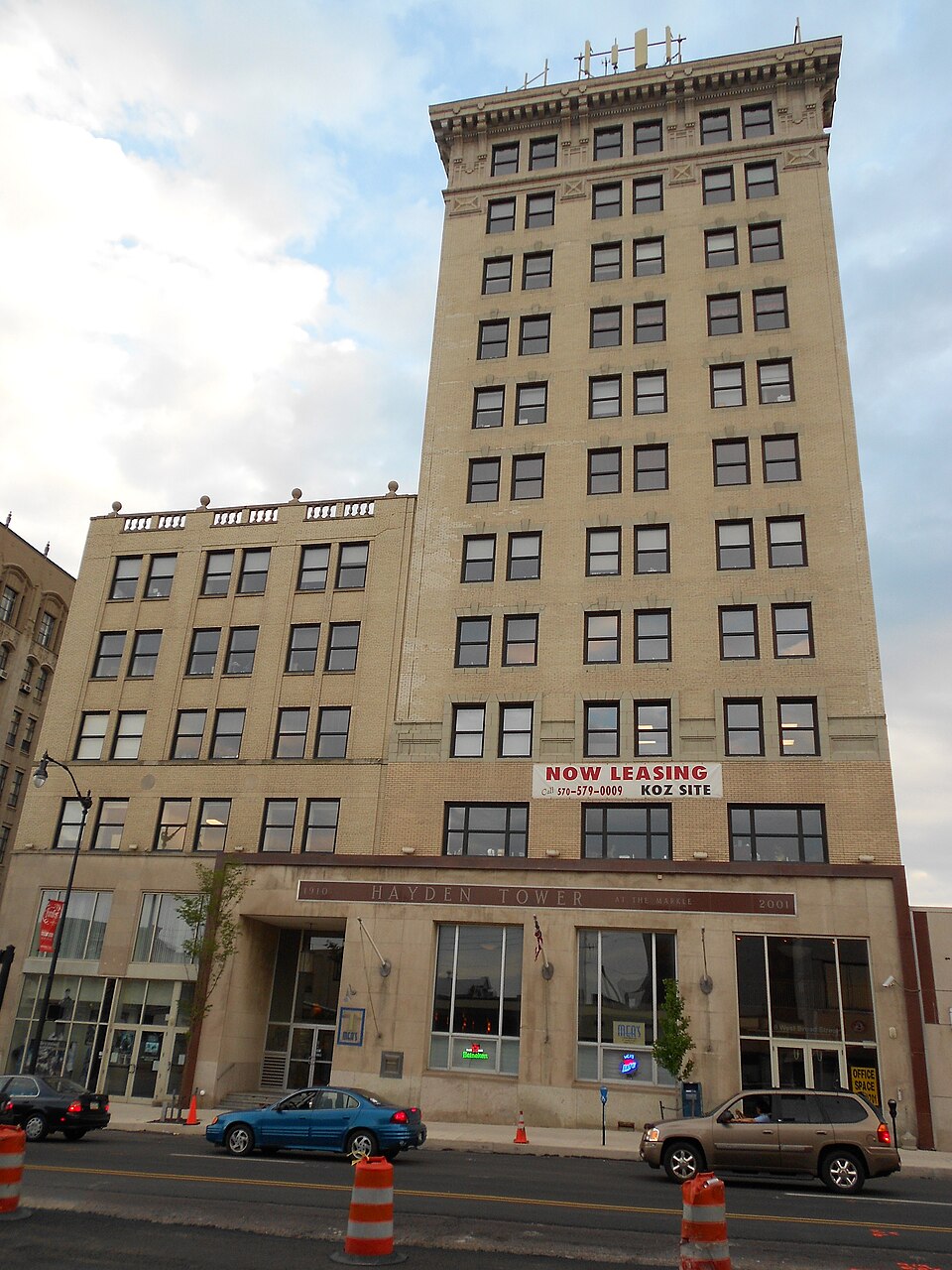
Lou Barletta, once Hazleton’s mayor, told Fox Business in 2018 that “the city that I was mayor of was 50 percent Latino, and I won with 90 percent of the vote.” PolitiFact, checking that claim, put the Latino share at 37.31 percent in 2010.
| City | Hispanic or Latino share of residents, 2019-2023 |
|---|---|
| Reading | 68.6% |
| Hazleton | 63.1% |
| Allentown | 53.8% |
| Lancaster | 42.8% |
| York | 36.0% |
Source: 2019-2023 American Community Survey five-year data profiles. Allentown was 12 percent Latino in 1990, NPR reported.
Justin Steil and Jennifer Ridgley write that Hazleton’s Illegal Immigration Relief Act, the first such local law in the country, divided native-born white residents from recent Latino arrivals in a city whose residents felt a sense of “class downgrading” after the economy restructured.
Jennifer Silva interviewed young working-class residents of a declining coal town in northeastern Pennsylvania. Silva found that they form political identities once steady jobs, unions, the nuclear family and religion have receded, and that coping with hardship becomes a reason to withdraw from conventional politics toward self-help and conspiracy theories.
Bethlehem Steel’s 1,800-acre plant employed more than 30,000 people by the late 1930s and closed in 1998. Lehigh County’s population grew 7.2 percent from 2010 to 2020, faster than any collar county’s. Amazon had more than 3,000 Lehigh Valley workers in 2024, NPR reported.
John Kennedy, a political scientist at West Chester University, told Fox 29 on Oct. 1 that “no county in the state mirrors the overall state performance as Northampton County.” Relative to the statewide change, Lackawanna shifted 3.8 points toward the Republican, and Lehigh and Northampton 0.2 points each in the same direction.
The 2020 Religion Census counts 96,397 Catholic adherents in Lackawanna County, 446.5 per 1,000 residents. The Diocese of Scranton closed Our Lady of Grace Church in Hazleton on June 13, 2026, and its decree page also lists Saint Michael Church in Scranton, closed Sept. 20, 2025, and Saint Adalbert in Glen Lyon, Dec. 6, 2025.
The Inquirer reported in May 2021 that Alden Global Capital had bought the Reading Eagle out of bankruptcy two years earlier for $5 million, and that the paper emerged with 111 jobs, half the number it had entering bankruptcy. The Morning Call’s newsroom numbered about 45 that month, when Alden’s purchase of its owner, Tribune Publishing, closed.
Lancaster County and the south-central corridor
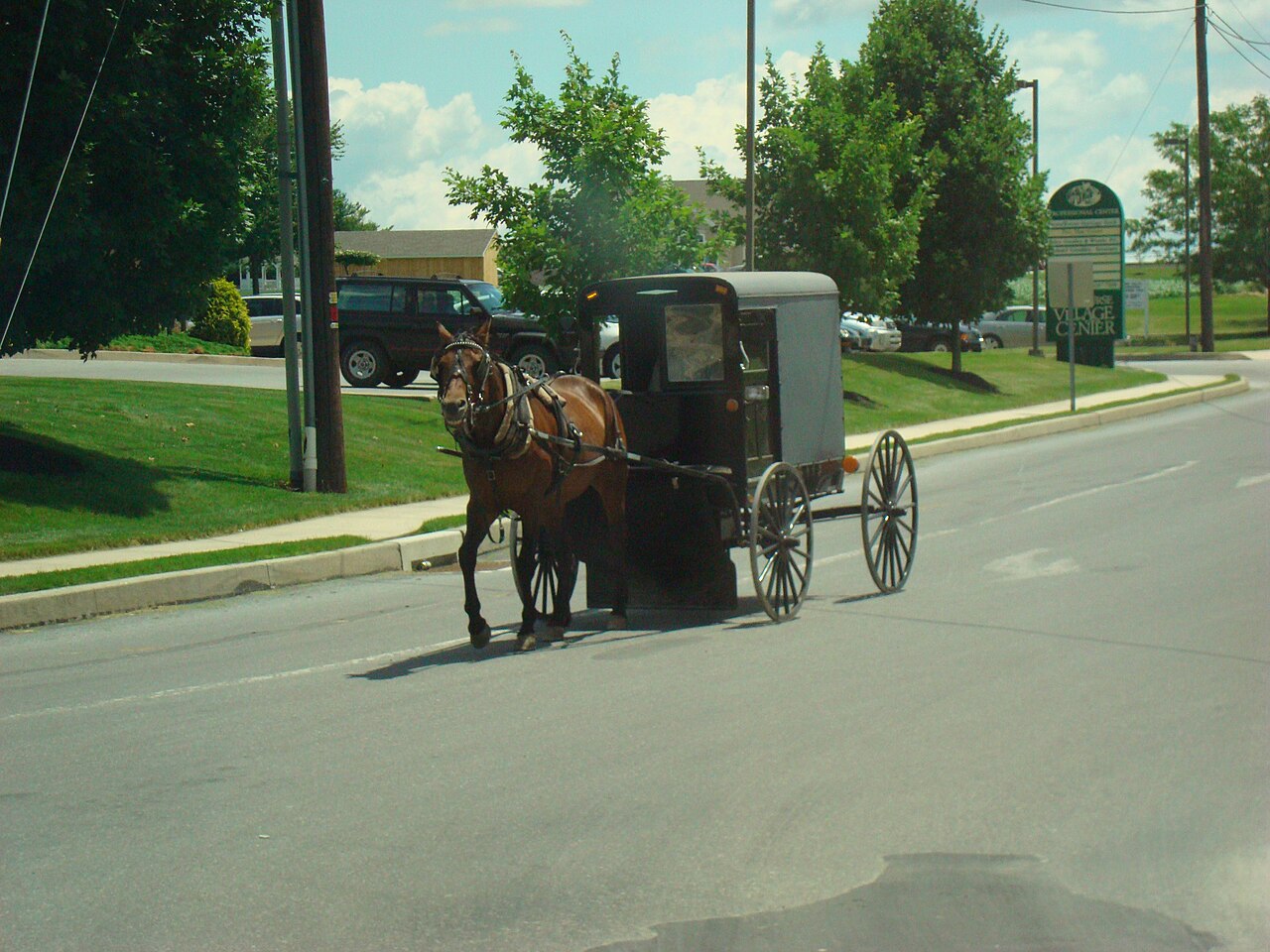
The Young Center for Anabaptist and Pietist Studies at Elizabethtown College counted 257 church districts and an estimated 43,640 people in the Lancaster County area settlement in 2024, first on its list of the 12 largest. PolitiFact reported in October 2024, citing the center, that Pennsylvania held about 93,000 Amish, children included.
The center’s director, Steven Nolt, put Lancaster County’s Amish at about 38,000, more than half under 18, and called a circulating claim of 180,000 Amish voters “completely false.” He and Kyle Kopko report that both the Amish vote total and the Amish turnout rate in Lancaster County were lower in 2024 than in 2020.
Puerto Ricans arrived in central Pennsylvania’s Dutch Country as migrant farmworkers after the 1940s, Ivette Guzmán Zavala writes, in a region where Mennonites and Amish are taken as the archetypal conservative, Protestant, agricultural, white “Dutchies.” Manufacturing employs 15.4 percent of York County’s employed residents and 14.4 percent of Lancaster County’s, against 11.5 percent statewide.
The eight counties from Harrisburg to Lancaster and York cast 15.5 percent of the 2022 vote and accounted for 17.1 percent of the movement. The Republican won the eight together by a net 27,954 votes, after 33,319 in 2018.
Cumberland shifted 6.9 points toward the Democrat relative to the statewide change, more than any other county.
Philadelphia
Philadelphia cast 9.3 percent of the 2022 vote and gave the Democrat a net 361,592 votes, the largest raw margin of any county. The city cast 10.1 percent fewer votes than in 2018, and its net Democratic margin fell by 58,018 votes, the largest decline among the 67 counties.
In the 2019-2023 survey the city is 38.9 percent non-Hispanic Black, and 32.5 percent of its employed residents work in education, health care and social assistance. From the 2016 to the 2020 presidential race it shifted 5.5 points toward the Republican relative to the statewide change.
The 41 rural counties
Colin Jerolmack and Edward Walker describe a rural, white, mixed-income Pennsylvania community that supported shale gas drilling through quiet mobilization, support that rested on partisan identity and obligations to the community even where residents gained little personally.
Penn State’s News Literacy Initiative says two Pennsylvania counties have no local newspaper and 18 have one.
The rural center and north cast 18.5 percent of the 2022 vote and 19.2 percent of the movement, about 69 percent of it toward the Republican. Greene County shifted 12.9 points toward the Republican relative to the statewide change, the largest county shift in either direction.
Votes cast in the 41 counties rose 13.8 percent between the two races.
Where to look on election night
The live county table at hesitation.media/election/#counties shows each county’s count against the margin it would post in a tied statewide race.
- Bucks, Chester, Montgomery and Delaware against one another, then Allegheny and Butler.
- Cumberland, Dauphin, Lancaster and York in the south-central corridor.
- Northampton and Lehigh in the Lehigh Valley, then Luzerne, Lackawanna and Schuylkill.
- Philadelphia’s total votes cast against the 2022 count, as well as its margin.
Race breakdowns cover PA-01 in Bucks, PA-07 in the Lehigh Valley, PA-08 in Luzerne and Lackawanna, and PA-10 across Dauphin, York and Cumberland.
The method, caveats and every source are under How we did this.
How we did this
Between the 2018 and 2022 governor’s races the statewide margin moved 2.3 points toward the Republican, from 17.07 points Democratic to 14.77. A county’s shift relative to the statewide change is the change in its Democratic margin between the two races minus that statewide change.
Hesitation Media weighted each county’s shift by the votes the county cast in 2022, added the weighted shifts regardless of direction, and grouped the counties; a group’s portion of that total is its share of the movement.
Presidential shifts use 2016 and 2020 county margins against the certified statewide margins. County vote shares are percent of the 2022 statewide vote. The county returns are Hesitation Media’s tables of 2018 and 2022 county results, built from MIT Election Data and Science Lab precinct files; the calculation and output tables are movement.py, group_summary_PA.csv and county_detail_PA.csv.
Every movement figure describes one pair of elections and is not a forecast. No source gathered for this analysis ties the changes in unions, parishes and newspapers to the 2018-to-2022 county shifts, and none reports how the valley cities’ Latino residents vote.
Census figures are the 2019-2023 American Community Survey five-year data profiles and the 2010 and 2020 decennial counts, pulled from api.census.gov on Nov. 3, 2026. Scholarly works marked “abstract” in the table below were read at abstract level only, and the body claims no more than each abstract states.
American Communities Project types are credited to the project by name; the project’s workbook spells the type Urban Burbs and its type page Urban Suburbs. Sources give the Bethlehem Steel closing as 1998 (Taft; NPR) and 1995 (WHYY); the body gives 1998.
| Passage | Figures | Source |
|---|---|---|
| Levittown | 5,750 contiguous acres of farmland near the Fairless Works (1951); slightly more than 17,300 homes; six models; 1952 to 1958; June 23, 1952; four municipalities, three school districts; Levitt quote; Daisy and William Myers, August 1957, a year of racist harassment; about 90% “One Race: White” (2010 Census) | “Levittowns (Pennsylvania and New Jersey),” Suzanne Lashner Dayanim, Encyclopedia of Greater Philadelphia, https://philadelphiaencyclopedia.org/essays/levittown/ (read in full; page says Bucks County, not lower Bucks, and “near that plant”) |
| Statewide margins; group vote shares and movement shares; net votes; votes-cast change (chart, key numbers, body) | 17.07 to 14.77; collar 23.03% / 33.5% / +334,410 to +388,273; Allegheny 10.68% / 15.8%; south-central 15.46% / 17.1% / -33,319 to -27,954; valleys 18.78% / 8.8%; Philadelphia 9.29% / 2.3% / +419,610 to +361,592 / -58,018 / -10.09% votes cast / pres. shift -5.48 / 19.6% of pres. movement; rural 41 counties 18.54% / 19.2% / +13.84% votes cast; other 3 counties 4.2% / 3.4% | C:\Users\brian\Desktop\Journalism\swing-state-cultures\scratch\attack\group_summary_PA.csv |
| Rural group direction | about 69% of the 41-county group’s absolute weighted movement toward the Republican (0.459 of 0.663); Cumberland +6.92 the largest Democratic-ward relative shift of all 67 counties; Greene -12.9 the largest in either direction | computed from C:\Users\brian\Desktop\Journalism\swing-state-cultures\scratch\attack\county_detail_PA.csv |
| County relative shifts (tables and body) | Montgomery +6.44; Delaware +4.92; Chester +4.52; Bucks +3.67; Allegheny +5.13; Butler +5.51; Westmoreland +1.59; Washington +1.06; Beaver -2.99; Fayette -8.94; Lackawanna -3.76; Lehigh -0.16; Northampton -0.18; Cumberland +6.92; Greene -12.9 | C:\Users\brian\Desktop\Journalism\swing-state-cultures\scratch\attack\county_detail_PA.csv |
| Bucks presidential margins | +0.8 (2016); +4.4 (2020) | C:\Users\brian\Desktop\Journalism\election-night-2026\counties.json, key PA; checked against the 2016 and 2020 county results in the ACP 2023 typology workbook, https://www.americancommunities.org/wp-content/uploads/2023/08/2023-Typology-1.xlsx (Bucks 167,060 to 164,361 of 345,042 in 2016; 204,712 to 187,367 of 397,291 in 2020) |
| ACP types for named counties (map, tables) | Montgomery, Delaware, Allegheny, Lehigh, Northampton: Urban Burbs; Bucks, Chester, Lancaster, Cumberland: Exurbs; Butler, Washington: Rural Middle America; York, Berks, Luzerne, Lackawanna, Westmoreland, Beaver: Middle Suburbs; Fayette: Working Class Country; map counts 36 / 8 / 6 / 5 / 5 / 4 / 2 / 1 | C:\Users\brian\Desktop\Journalism\election-night-2026\counties.json, key PA (acp field; American Communities Project); checked against the ACP 2023 typology workbook, https://www.americancommunities.org/wp-content/uploads/2023/08/2023-Typology-1.xlsx (all 67 PA counties match) |
| County and city ACS figures (Black = DP05_0083PE, not Hispanic or Latino, Black alone; industry = civilian employed population 16+, by residence) | bachelor’s: Chester 56.6, Montgomery 52.3, Bucks 43.9, Delaware 41.6, PA 34.5; Black: Philadelphia 38.9; Hispanic: Lancaster city 42.8, York city 36.0, Philadelphia 15.2, Allentown 53.8, Reading 68.6, Hazleton 63.1; ed/health/social: Allegheny 28.3, Philadelphia 32.5; manufacturing: Allegheny 7.6, York 15.4, Lancaster 14.4, PA 11.5 | https://api.census.gov/data/2023/acs/acs5/profile?get=NAME,DP02_0068PE,DP02_0094PE,DP03_0035PE,DP03_0042PE,DP03_0033PE,DP05_0076PE,DP05_0082PE,DP05_0083PE,DP05_0085PE&for=county:*&in=state:42 ; same query with for=place:* and for=state:42 (charted in charting\charted-S1-census.csv) |
| Population change 2010 to 2020 | Lehigh +7.2, more than any collar county (Chester +7.1; Montgomery +7.1) | https://api.census.gov/data/2010/dec/sf1?get=NAME,P001001&for=county:*&in=state:42 ; https://api.census.gov/data/2020/dec/pl?get=NAME,P1_001N&for=county:*&in=state:42 |
| Frank | groups formed where Democratic parties were not historically strong; many led by women; revived local Democratic organizations in six swing counties near Philadelphia and the Lehigh Valley; helped Pennsylvania Democrats in 2018 | Maximilian Frank, “How Grassroots Resistance Networks Boosted Pennsylvania Democrats in 2018,” in Skocpol and Tervo, eds., Upending American Politics (Oxford, 2020), https://doi.org/10.1093/oso/9780190083526.003.0012 (abstract, read on academic.oup.com/book/33598/chapter/288088740) |
| Kennedy (Fox 29) | Northampton quote (verbatim on page); Kennedy identified as a West Chester University political scientist | “How suburban voters are set to decide Pennsylvania’s closest races,” Isabel Soisson, Fox 29, Oct. 1, 2026, https://www.fox29.com/news/how-suburban-voters-set-decide-pennsylvanias-closest-races.amp (read in full; fetched again Nov. 3, 2026) |
| Winant via Camp | Gabriel Winant; Pittsburgh struggling by the 1970s and 1980s like other industrial cities; health care developed as another major industry | Michael Camp, review of “The Next Shift,” Journal of Appalachian Studies 30(2), 2024, https://doi.org/10.5406/23288612.30.2.08 (publisher page returns 403; review text read via https://api.openalex.org/works/doi:10.5406/23288612.30.2.08) |
| Newman and Skocpol via Harvard Gazette (key numbers, body) | at least 37 USW halls in western Pennsylvania in the 1960s, eight survived in 2022; scouts, alcohol support groups, weddings, sports leagues; other, often more conservative groups; gun clubs; 12% and 1% of stickers | “Why so many blue-collar workers drifted away from Democratic Party,” Christy DeSmith, Harvard Gazette, Oct. 26, 2023, https://news.harvard.edu/gazette/story/2023/10/why-so-many-blue-collar-workers-drifted-from-democrats (read in full) |
| BLS union membership | 10.9% (2025), 620,000 (release text); 11.7% (2024) (release Table 1) | “Union Members in Pennsylvania — 2025,” Bureau of Labor Statistics, March 5, 2026, https://www.bls.gov/regions/mid-atlantic/news-release/unionmembership_pennsylvania.htm (read in full) |
| Diocese of Pittsburgh | 188 parishes into 57 (groupings announced April 28, 2018); 323 to about 225 in the 1990s; the Very Rev. Samuel Esposito, episcopal vicar, quote summarizing a refrain of Pope Francis | “As the Catholic Diocese of Pittsburgh announces mergers, here’s what it means for parishioners and church buildings left behind,” Melissa Rossiter and Mark Kramer, PublicSource, April 24, 2018 (page shows a Nov. 5, 2021 update), https://www.publicsource.org/the-catholic-diocese-of-pittsburgh-will-announce-church-mergers-this-week-what-it-means-for-parishioners-and-the-church-buildings-left-behind/ (read in full) |
| Post-Gazette | Jan. 7, 2026 announcement; May 3 final edition; more than $350 million over 20 years (company figure); strike more than 1,000 days (Nieman Lab; PublicSource calls it a three-year strike); April 14, 2026 deal to acquire; Thursdays and Sundays planned | “Pittsburgh Post-Gazette says it will cease operations in May,” Charlie Wolfson, Jamie Wiggan and Rich Lord, PublicSource, Jan. 7, 2026, https://www.publicsource.org/newspaper-pittsburgh-post-gazette-cease-operations-may/ ; “Will Pittsburgh become America’s most important city without a newspaper?” Joshua Benton, Nieman Lab, Jan. 7, 2026, https://www.niemanlab.org/2026/01/will-pittsburgh-become-americas-most-important-city-without-a-newspaper/ ; “Pittsburgh Post-Gazette rescued from shutdown by last-minute sale,” Liam Reilly, CNN via KTVZ, April 14, 2026, https://ktvz.com/money/cnn-business-consumer/2026/04/14/pittsburgh-post-gazette-rescued-from-shutdown-by-last-minute-sale/ (all read in full) |
| Guzmán Zavala | Puerto Rican farmworkers after the 1940s; Mennonites and Amish as archetypal “Dutchies” | Ivette Guzmán Zavala, “Visualizing a Puerto Rican Mennonite Woman in Pennsylvania: Photographs, Oral History, and Fiction,” US Latina & Latino Oral History Journal, 2025, https://doi.org/10.1353/loh.00005 (abstract, via api.crossref.org) |
| Young Center settlement table | Lancaster County area: 257 districts; 43,640 (2024); first of the 12 listed (the table does not say “North America”) | “Twelve Largest Amish Settlements, 2024,” Young Center, Elizabethtown College, https://groups.etown.edu/amishstudies/files/2025/06/Twelve-Largest-Amish-Settlements-2024.pdf (read in full) |
| Nolt via PolitiFact | about 93,000 in Pennsylvania including children (Young Center estimate as PolitiFact reports it); about 38,000 in Lancaster County, more than half younger than 18 (Nolt); “The claim is completely false” | “Claims about 180,000 Amish registered voters in Lancaster, Pennsylvania, are farfetched,” Kwasi Gyamfi Asiedu, PolitiFact, Oct. 29, 2024, https://politifact.com/factchecks/2024/oct/29/tweets/claims-about-180000-amish-registered-voters-in-lan/ (read in full) |
| Nolt and Kopko | 2024 Amish vote total and turnout lower than 2020 | Steven M. Nolt and Kyle C. Kopko, “Research Note: Measuring the Amish Vote in Lancaster County, Pennsylvania, 2024,” Journal of Plain Anabaptist Communities, Jan. 29, 2026, https://doi.org/10.18061/jpac.7064 (abstract, via api.crossref.org) |
| Religion Census (ARDA) | Lackawanna 96,397, 446.50 per 1,000 | https://www.thearda.com/us-religion/census/congregational-membership?y=2020&t=0&c=42069 (fetched) |
| Taft on Bethlehem | 1,800-acre plant; by the late 1930s ramping up to peak production with employment of more than 30,000; plant closure in 1998 | Chloe E. Taft, “Bethlehem, Pennsylvania,” Oxford Research Encyclopedia of American History, 2023, https://doi.org/10.1093/acrefore/9780199329175.013.1066 (abstract, via api.crossref.org) |
| NPR on the Lehigh Valley | shut down in 1998; “Amazon has more than 3,000 workers here” (present tense in the Nov. 2, 2024 report); Allentown 12% Latino in 1990 | “The Lehigh Valley has changed drastically. Now, it could swing Pennsylvania,” Lexie Schapitl, NPR via KPBS, Nov. 2, 2024, https://www.kpbs.org/news/politics/2024/11/02/the-lehigh-valley-has-changed-drastically-now-it-could-swing-pennsylvania (fetched) |
| WHYY on Bethlehem | plant “shuddered in 1995” | “Bethlehem then and now, from steel town to arts community,” Lindsay Lazarski, WHYY, June 26, 2014, https://whyy.org/articles/photos-bethlehem-then-and-now-from-steel-town-to-arts-community (fetched) |
| Shackel on Hazleton | late-1990s tax breaks; fulfillment centers; Dominican migration to the area | Paul A. Shackel, “Deindustrialization and the New Twenty-First-Century Immigrant,” in Remembering Lattimer (University of Illinois Press, 2018), https://doi.org/10.5622/illinois/9780252041990.003.0007 (abstract, read on academic.oup.com/illinois-scholarship-online/book/15783/chapter/170606431) |
| PolitiFact on Hazleton (key numbers, body; Barletta identified as Hazleton’s former mayor per the PolitiFact headline) | 1,132 (4.84%) in 2000; 9,454 (37.31%) in 2010; Barletta quote (Fox Business, June 7, 2018) | “Hazleton wasn’t half-Latino when Lou Barletta was re-elected mayor. He said it was.” Colin Deppen, PolitiFact, June 12, 2018, https://www.politifact.com/factchecks/2018/jun/12/lou-barletta/hazleton-wasnt-half-latino-when-lou-barletta-was-r (read in full) |
| Steil and Ridgley | restructuring and “class downgrading”; first local IIRA in the U.S.; divisions between native-born white residents and Latino arrivals | Justin Steil and Jennifer Ridgley, “‘Small-Town Defenders’: The Production of Citizenship and Belonging in Hazleton, Pennsylvania,” Environment and Planning D, 2012, https://doi.org/10.1068/d0109 (abstract, via api.crossref.org) |
| Diocese of Scranton decrees | relegation (closure) of Our Lady of Grace, Hazleton, June 13, 2026; Saint Adalbert, Glen Lyon, Dec. 6, 2025; Saint Michael, Scranton, Sept. 20, 2025; mergers and suppressions also listed; earliest decree April 8, 2022 | “Bishop’s Decrees Regarding Vision 2030,” Diocese of Scranton, https://www.dioceseofscranton.org/vision-2030/bishops-decrees-regarding-vision-2030/ (fetched) |
| Silva | young working-class interviews in a declining northeastern Pennsylvania coal town; political identities after jobs, unions, family and religion recede; withdrawal, self-help, conspiracy theories | Jennifer M. Silva, “‘This Thing Is a Joke’: How Working-Class Young Americans Make Meaning out of Politics in an Era of Distrust and Isolation,” KZfSS, 2023, https://doi.org/10.1007/s11577-023-00882-7 (abstract, via api.crossref.org) |
| Alden papers | Reading Eagle bought out of bankruptcy two years before May 2021 for $5 million; 111 jobs, half; Morning Call newsroom about 45; Tribune purchase finalized May 2021, Tribune owned the Morning Call | “Allentown nonprofits rally to the defense of the Morning Call newsroom,” Harold Brubaker, Philadelphia Inquirer, May 25, 2021, https://www.inquirer.com/business/alden-morning-call-tribune-baltimore-sun-hedge-fund-layoffs-20210525.html (fetched); “Hedge Fund That Owns Local Newspapers Purchases Tribune Publishing,” Tom Sofield, Levittown Now, May 25, 2021, https://levittownnow.com/2021/05/25/hedge-fund-that-owns-local-newspapers-gets-much-bigger/ (fetched) |
| Jerolmack and Walker | rural, white, mixed-income Pennsylvania community; quiet mobilization; partisan identities and community obligations even when personal benefits were limited | Edward T. Walker and Colin Jerolmack, “Please in My Backyard: Quiet Mobilization in Support of Fracking in an Appalachian Community,” American Journal of Sociology 124(2), 2018, https://doi.org/10.1086/698215 (publisher page returns 403; abstract read via https://api.openalex.org/works/doi:10.1086/698215) |
| News deserts | two counties none, 18 one | “news deserts” glossary entry, Penn State News Literacy Initiative, https://newsliteracy.psu.edu/glossary/news-deserts (fetched; no date, study or year cited on page) |
| Visuals | PA-acp-map.png and PA-groups.png: titles, alt text and source lines; every number checked against the CSVs by scratch/visuals/check.py (last run PASS) |
C:\Users\brian\Desktop\Journalism\swing-state-cultures\visuals\visuals.md |
| Photos | Levittown (Library of Congress, Highsmith); Bethlehem USW hall (Warren LeMay, CC BY-SA 2.0); Hazleton Hayden Tower (Smallbones, CC0); Intercourse buggy (Rlevse, public domain); captions describe visible content only | C:\Users\brian\Desktop\Journalism\swing-state-cultures\visuals\photos\credits.md |
| Race links | PA-01, PA-07, PA-08, PA-10 | C:\Users\brian\Desktop\Journalism\election-night-2026\races\ |
Changelog
- Published.
Hesitation Media sends new records to the newsletter first. Subscribe on Substack.